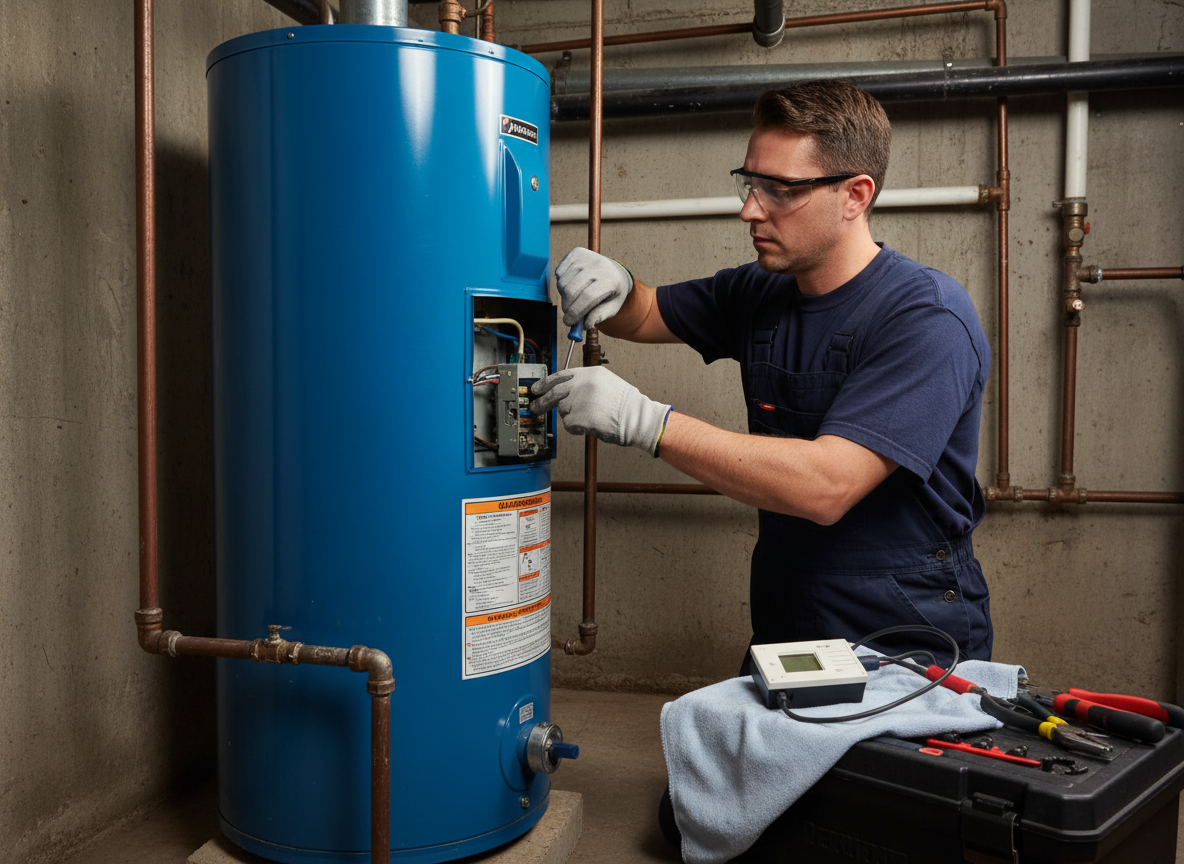
In Fauquier County’s humid subtropical climate, cold winter snaps put extra demand on water heaters, often revealing failing thermostats that cause inconsistent temperatures or no hot water at all. Replacing the thermostat requires matching the exact voltage and temperature range of the existing unit while observing manufacturer torque specs on the mounting screws to avoid warping the tank flange. We stock both single and dual-element models common in Warrenton Village Center homes and always verify the new thermostat against the heater’s data plate before installation.
Older homes in the Warrenton Historic District frequently have 240-volt electric units installed decades ago; swapping the thermostat on these units means confirming the wiring insulation is still intact and that the high-limit switch is functioning within the 180 °F reset range required by current Virginia plumbing code. Gas models present a different set of checks—ensuring the thermocouple remains properly seated and the pilot flame stays blue after the new control is installed. Skipping these steps can lead to short cycling or safety valve trips that only appear weeks later.
We begin every job by shutting off power or gas at the source and draining several gallons from the tank to lower internal pressure. The old thermostat is removed carefully so the sensor bulb or probe does not damage the tank lining. After installing the new unit we refill the tank, bleed air from the lines, and run a full temperature cycle while monitoring for leaks at the element gaskets. Homeowners receive a written note of the model number installed and the exact temperature setting we left on the dial.
Seasonal Guidance for Warrenton Winters
Cold snaps between December and February often surface thermostat failures first in units located in unheated crawl spaces or garages. Scheduling replacement before temperatures drop prevents burst pipes when hot water is suddenly unavailable. We keep common 120 V and 240 V thermostats on the truck for same-day service during normal business hours.
Water Heater Thermostat Replacement Services We Offer
✓Electric Element Thermostat Replacement
Direct swap of upper or lower thermostats on standard residential electric water heaters, restoring consistent hot water without full unit replacement.
✓Gas Control Valve Thermostat Replacement
Replacement of the integrated thermostat on natural gas or propane water heaters, including pilot assembly inspection and flame adjustment.
✓Dual Thermostat Calibration
Testing and precise adjustment of both upper and lower thermostats on large-capacity units to eliminate temperature swings between showers.
✓High-Limit Switch Integration
Installation or replacement of the high-limit safety switch alongside the thermostat to meet current Fauquier County inspection requirements.
✓Tankless Thermostat Module Swap
Replacement of the electronic control board and temperature sensor on tankless units common in newer Warrenton Village Center construction.
How it works
- 1
Site Assessment
We inspect the water heater location, note model and age, and confirm power or gas supply before any work begins.
- 2
Isolation and Drain
Power or gas is shut off and several gallons are drained to reduce tank pressure and protect the new thermostat during install.
- 3
Old Unit Removal
Wiring or gas connections are labeled, the old thermostat is extracted, and the sensor area is cleaned of sediment.
- 4
New Thermostat Installation
The correct replacement is fitted, connections are torqued to spec, and the unit is refilled while checking for leaks.
- 5
Testing and Handover
We run a full heat cycle, verify temperature at fixtures, and leave written settings and model information with the homeowner.
Pricing
Most thermostat replacements fall between $175 and $325 depending on whether the unit is electric or gas and how accessible the heater is.