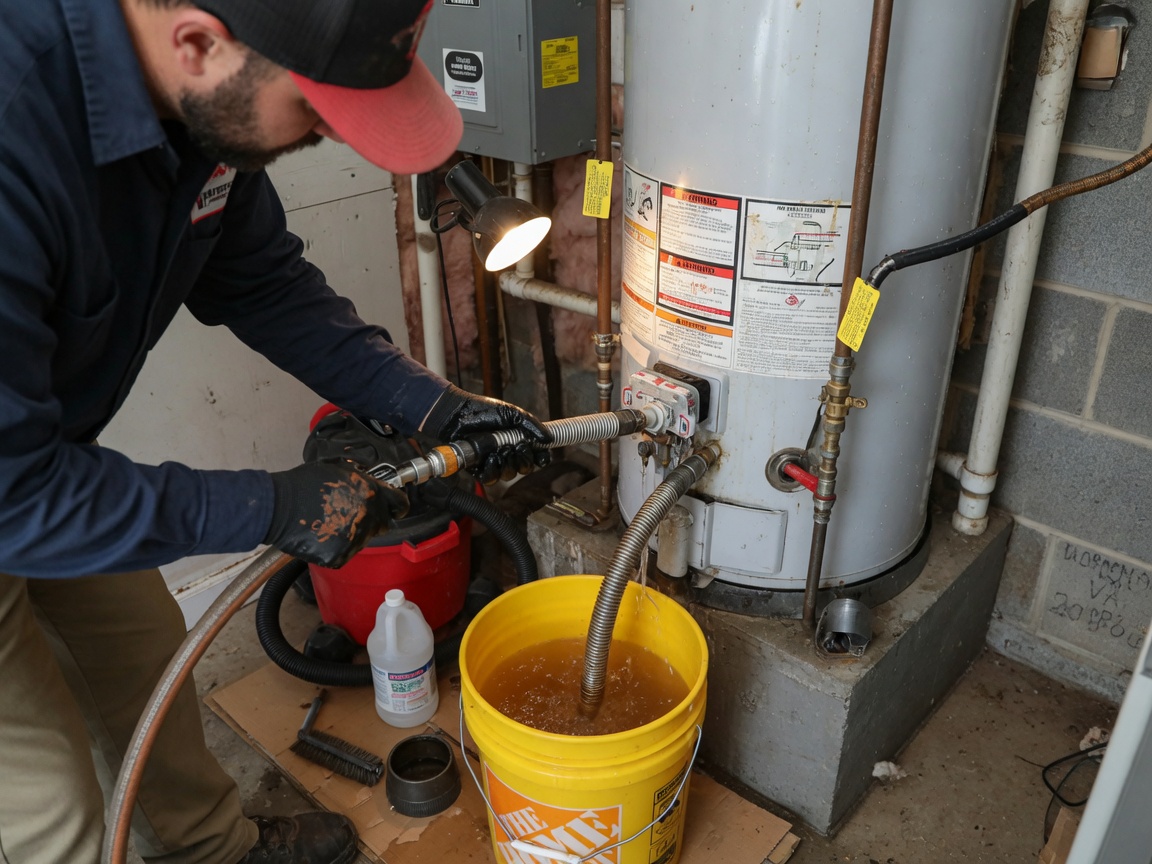
Sediment from hard water in Fauquier County settles quickly inside gas water heater tanks, especially after cold winters when usage spikes. Left unchecked it insulates the burner, raises fuel costs, and shortens tank life. A proper flush uses a high-volume pump and multiple rinse cycles to break up and remove the scale without damaging the glass lining or anode rod. We always verify the T&P valve opens and closes freely and check the draft hood for proper venting before leaving the job.
In older homes near the Warrenton Historic District or Airlie Conference Center, gas lines can be corroded or undersized. Before flushing we isolate the heater, test for leaks with soapy solution, and confirm the gas shutoff operates smoothly. If the tank is more than ten years old we recommend inspecting the anode rod at the same time; a depleted rod allows rapid corrosion once the sediment layer is removed. We never flush a tank showing signs of active leakage.
Seasonal Guidance for Warrenton Winters
Cold snaps increase hot-water demand and accelerate mineral dropout. Scheduling a flush in early fall prevents mid-winter failures when plumbers are busiest. We also note that homes in Warrenton Village Center often have limited access to the heater, so we bring extra hose length and a wet-vac to manage drainage without flooding finished spaces.
Code and Safety Notes
Virginia plumbing code requires a full sediment flush whenever a gas water heater shows temperature fluctuations or rumbling. We document the condition of the flue and combustion air supply on every visit and advise homeowners when a unit should be replaced rather than flushed to stay within current efficiency standards.
Gas Water Heater Flushing Services We Offer
✓Sediment Removal Flush
High-volume flushing breaks up and evacuates mineral deposits that cause rumbling and reduced hot-water flow.
✓Anode Rod Inspection During Flush
We check or replace the anode rod while the tank is drained to prevent accelerated corrosion once sediment is gone.
✓Burner and Pilot Cleaning
Dust and scale are removed from the burner assembly and pilot orifice to restore clean ignition and steady flame.
✓T&P Valve Testing and Flush
The temperature and pressure relief valve is exercised and the discharge line cleared to ensure safe pressure release.
✓Gas Line Leak Check
All accessible gas connections are tested for leaks before and after the flush to maintain safe operation.
How it works
- 1
Isolate and Drain
Shut off gas and cold-water supply, attach drain hose, and empty the tank completely.
- 2
Break Up Sediment
Use a powered pump to agitate and loosen scale inside the tank through the drain valve.
- 3
Multiple Rinse Cycles
Flush with fresh water until discharge runs clear, repeating until no more debris appears.
- 4
Refill, Test, and Inspect
Refill tank, relight pilot, check for leaks, verify burner operation, and confirm hot water delivery.
Pricing
Cost depends on tank size, sediment load, and access; we provide a firm quote before starting work.